The Village of Senneville, Québec
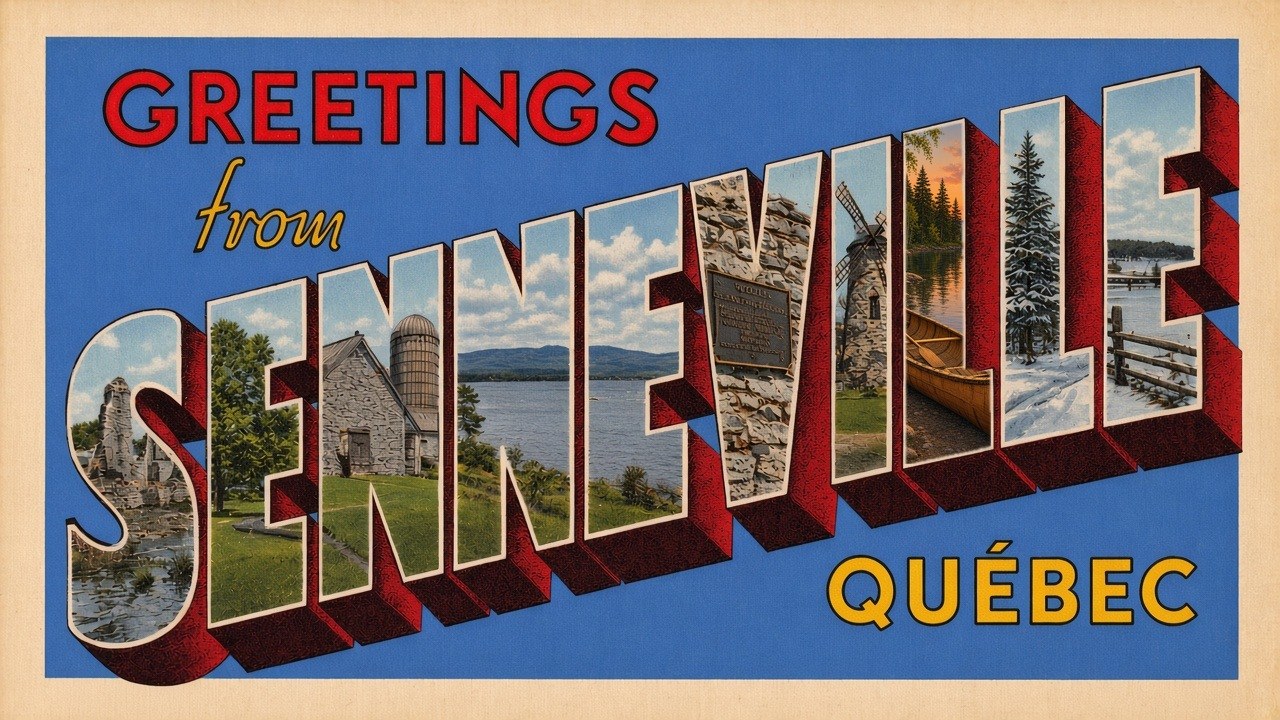
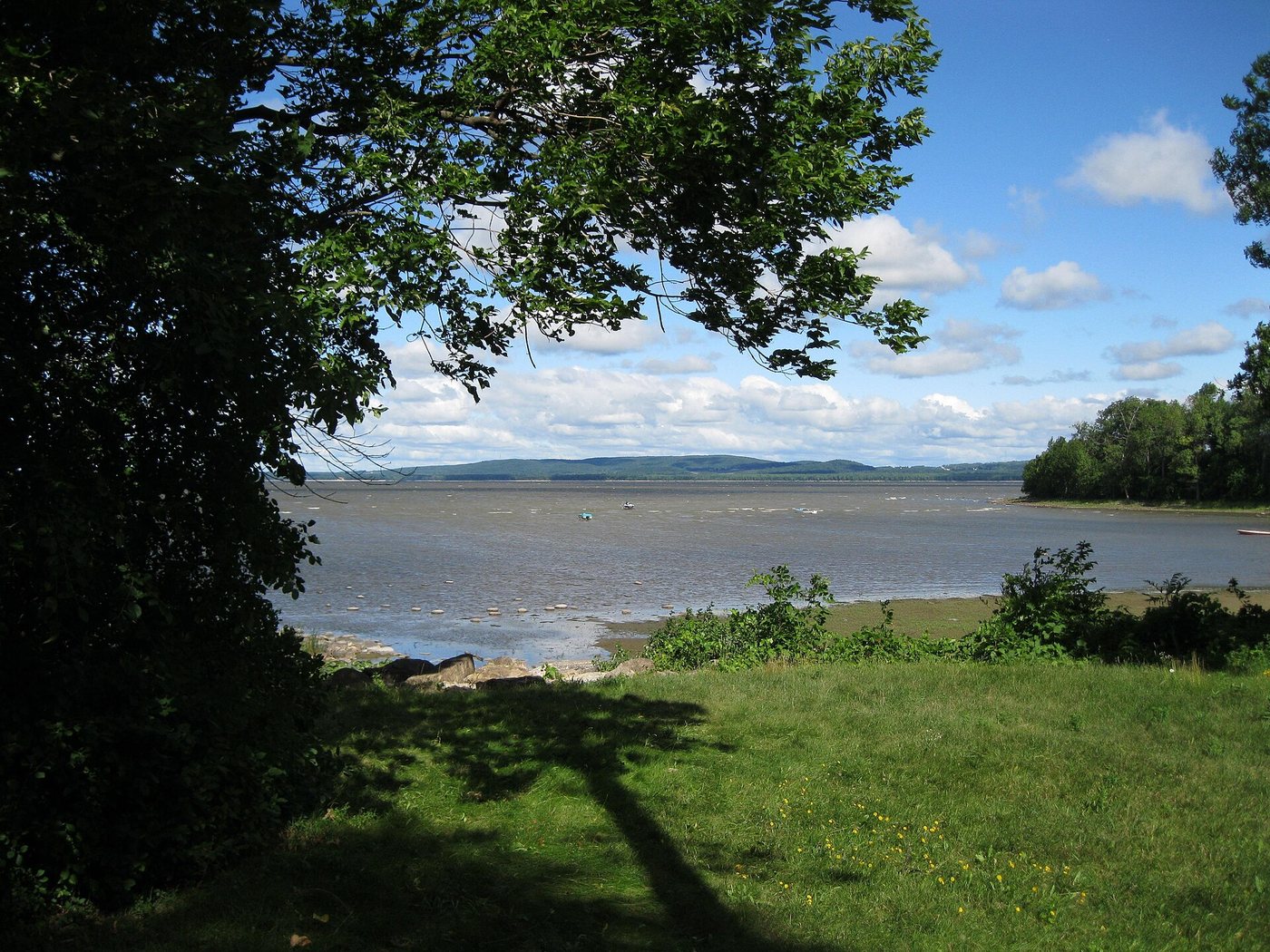
Senneville sits at the far western tip of the Island of Montréal, where the Ottawa River widens into the Lake of Two Mountains and meets the Rivière des Prairies and the St. Lawrence. It is one of the smallest municipalities on the island, with 951 residents in the 2021 census, but few places of its size hold so much history. In just over three centuries it has been a fur-trading outpost, a fortified frontier, a battleground, a farming parish, a retreat for Montréal's richest families and, finally, a self-governing village that fought to keep its independence.

Before the Seigneury
The waterways around Senneville were travelled for thousands of years before Europeans arrived. The Ottawa River was one of the main canoe routes into the continent's interior, and its junction with the St. Lawrence at the head of Montréal Island was a natural meeting point. Québec's Ministry of Culture has recognized "the exceptional historic and prehistoric archaeological potential" of the Fort Senneville ruins and their surroundings, which means the ground there may hold evidence of Indigenous occupation much older than the fort. We have not yet found a published, site-specific account of which peoples camped or lived at Senneville before contact, so this article does not name any.
A Seigneury on the Lake (1672–1706)
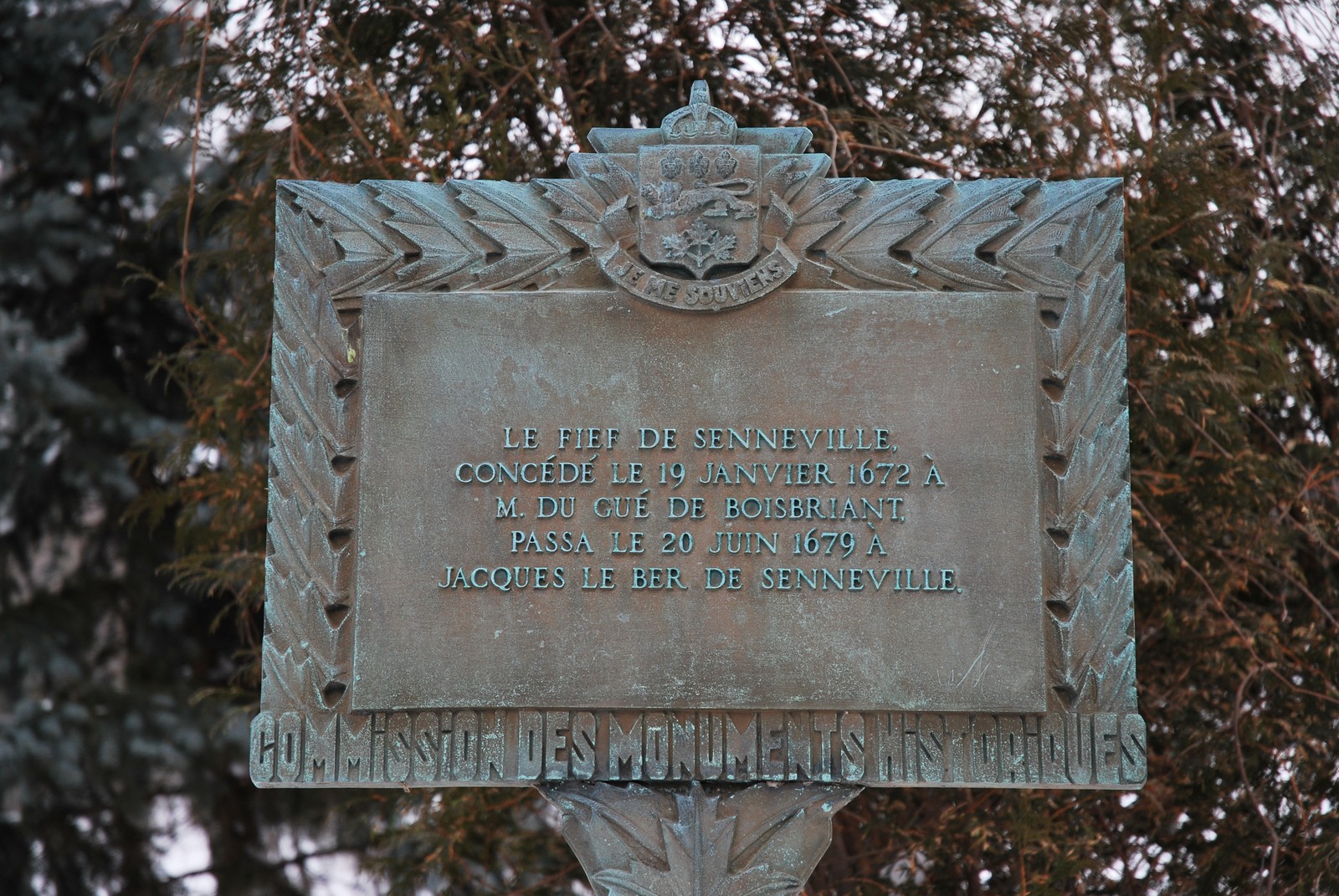
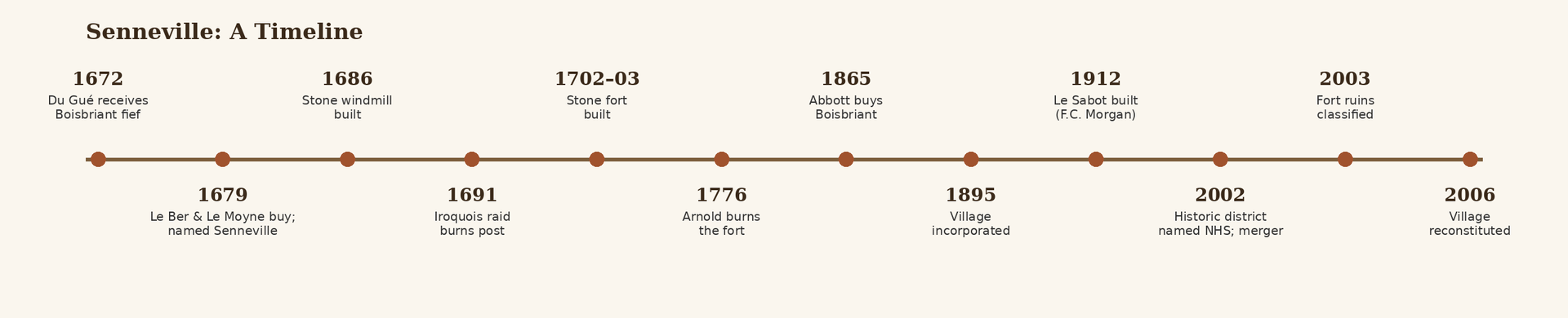
Senneville's recorded story begins in 1672, when Michel Sidrac Du Gué, a retired captain of the Carignan-Salières Regiment, received a fief at the western tip of the island from the Sulpicians, who were the seigneurs of Montréal. He named it Boisbriant and built a wooden trading post there. A stockade may already have stood on the site by 1671. The post did so well that it drew the attention of Charles Le Moyne and Jacques Le Ber, two of the richest and most influential merchants in New France. They acquired Boisbriant from Du Gué in 1679, reportedly in settlement of a debt.
Under its new owners the post thrived, selling tinware, food, clothing, spirits and guns to fur traders, local settlers and fishermen. When Le Moyne died in 1685, Le Ber became sole owner and renamed the land Senneville, after Senneville-sur-Fécamp in Normandy, the village near his birthplace. (Some sources date the renaming to 1679.)

The Windmill and the Fort
One of Le Ber's first projects, finished in 1686, was a stone windmill on a hill above the lake. It ground the grain grown on the land, but it was also built for war, with thick walls, square musket loopholes and machicolations at the top so defenders could drop stones or hot liquids on attackers. From its height a lookout could watch the Ottawa River, the Lake of Two Mountains and the mouth of the Rivière des Prairies. Historians describe it as unlike any other mill in New France at the time.
These were dangerous years. France and the Iroquois Confederacy (Haudenosaunee) were at war, and the western tip of the island was the colony's front door. In October 1687 Iroquois warriors struck the Senneville mill and nearby Fort Sainte-Anne. Several settlers were killed, but the attackers were driven off. In 1689, the year of the Lachine raid, a scout patrol from Ville-Marie fought an Iroquois war party in the Battle of the Lake of Two Mountains. That battle is now a National Historic Site of Canada, commemorated on Senneville Road.
THE BATTLE OF THE LAKE OF TWO MOUNTAINS
Following the Lachine massacre in August 1689, the Iroquois continued to terrorize the Montréal area. In October, governor Denonville sent out a scouting party of 28 under the Sieurs Daniel Greysolon Dulhut and Nicolas d'Ailleboust de Manthet which came upon a party of 22 Iroquois in the Lac des Deux Montagnes. In the mêlée that followed this surprise encounter, 18 Iroquois were killed, three taken prisoner while one swam to safety. This victory did much to restore the shaken confidence of the inhabitants.
The worst attack came in 1691, when an Iroquois (Haudenosaunee) raiding party attacked Senneville. By local tradition, the miller's wife and a handful of employees held out against a far larger force. The post's buildings were burned, but the stone windmill survived.
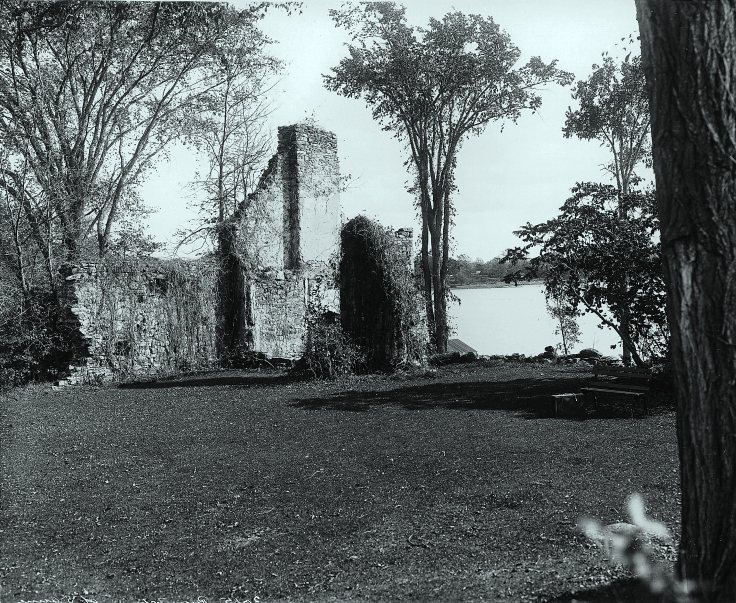
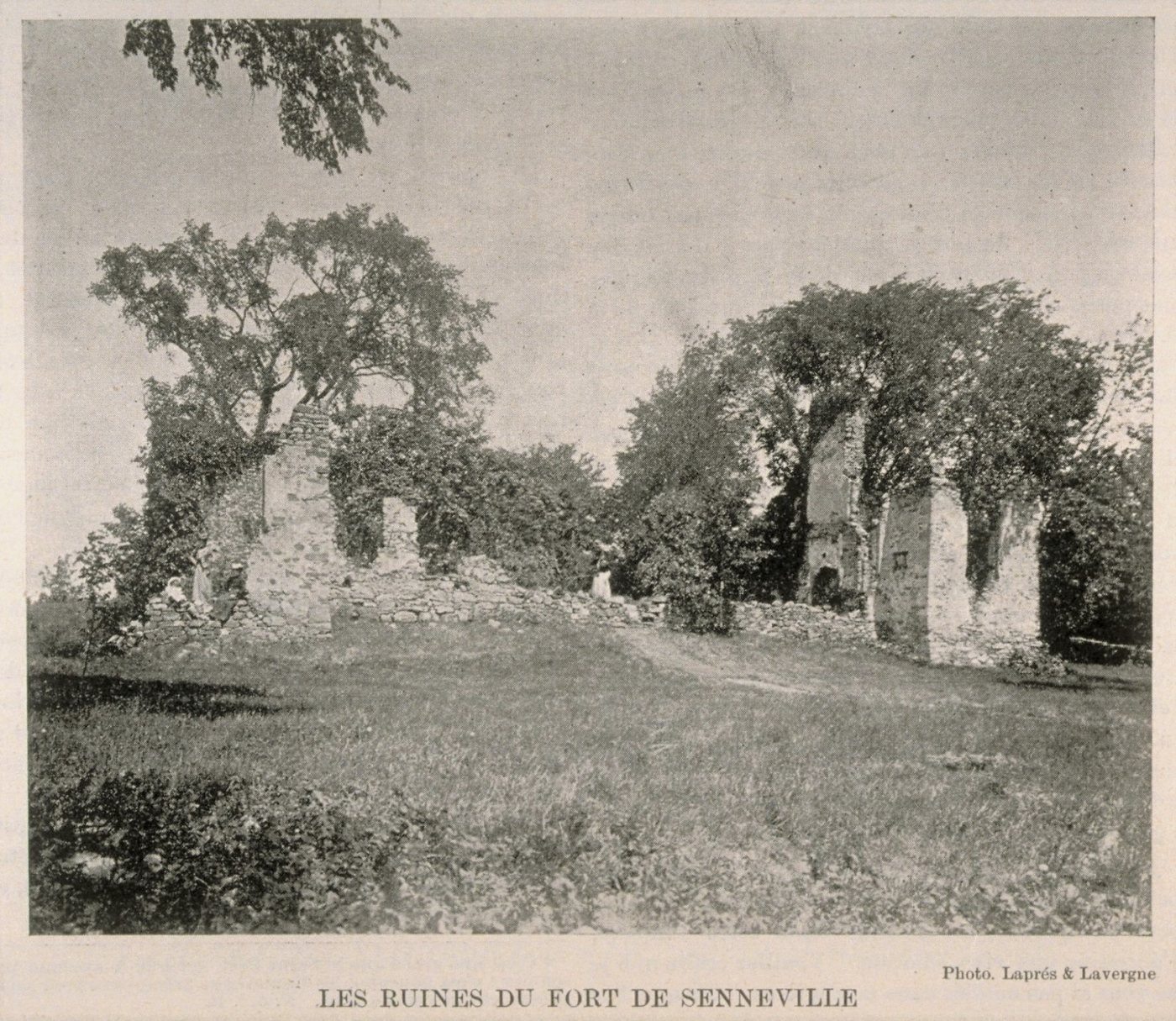
After this raid Governor Frontenac ordered a stronger fort in 1692. In 1702–1703 Le Ber's son, Jacques Le Ber de Senneville, built a stone fort with high walls and corner bastions, along with a large stone house. Armed with cannon and swivel guns, it became what military historian René Chartrand calls the "most substantial castle-like fort" near Montréal. It was one of roughly 30 outlying forts that guarded the island, and one of only a handful built of stone. The windmill was rebuilt in 1700 and was probably in use until about the 1780s. A seigneurial manor house followed in 1706.
The Great Peace of Montréal in 1701 brought the wars with the Iroquois to an end, and the new fort was never attacked by them. The elder Le Ber kept up his profitable business until his death in 1706, and his descendants held the land for the next half century.
Conquest and the American Invasion (1760–1776)
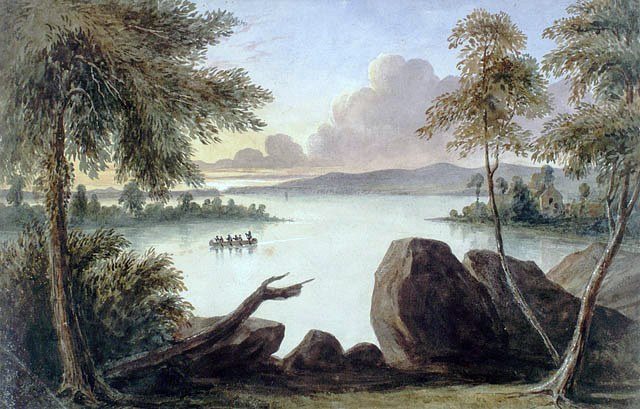
After New France passed to Britain (Montréal surrendered in 1760 and the Treaty of Paris followed in 1763), the British did not use Fort Senneville as a military post. It stood quietly until the American Revolution.
In 1775 American forces invaded Canada, occupying Montréal and laying siege to Québec. In May 1776 a British force under Captain George Forster, made up mostly of Haudenosaunee warriors with some Canadian volunteers, captured the American post at Les Cèdres (the Battle of the Cedars) and a relief column sent to help it. Forster took several hundred prisoners and advanced as far as Fort Senneville before falling back across the water to Quinze-Chênes, near Vaudreuil.
Benedict Arnold, commanding at Montréal, gave chase. He reached Senneville on May 26, 1776, as Forster's men landed on the far shore, and burned the fort. An attempt to cross the river was driven back by cannon Forster had captured at the Cedars. Instead, a prisoner exchange was agreed at Sainte-Anne on May 27, and the Americans were handed back at Fort Anne on May 30. Fort Senneville has stood in ruins ever since.

The War of 1812
No battle, garrison or troop action at Senneville during the War of 1812 is documented in the sources we checked. Local men may well have served in the Lower Canada militia, but we have found no record that ties the war to the village itself.
A Farming Parish (1800s)
For most of the 19th century, the land around the ruined fort was farmland within the parish of Sainte-Anne-du-Bout-de-l'Île. The soils here are unusually varied for the island: clay near the northeast and along parts of the western shore, sandy ground inland, and well-drained calcareous loam along the north shore. The loamy slopes facing the Lake of Two Mountains, warmed by the lake, were especially good for orchards and tender crops. That farming tradition survives in Senneville's barns and agricultural estates, and today in La Ferme du Fort Senneville, an organic demonstration farm.
Railways and the Great Estates (1850s–1930)
The railways changed everything. In the 1850s the first line through Sainte-Anne-de-Bellevue put Senneville within easy reach of Montréal, and the village became a summer retreat for the lawyers, bankers and industrialists of the city's Golden Square Mile. Large country houses soon lined the lakeshore, and several of these families gave their names to local points of land: Pointe Abbott, Pointe Angus, Pointe Forget, Pointe Boyer and Pointe Wanklyn among them. Descendants of several of these families still live in Senneville.
Boisbriant (170 chemin de Senneville). In 1865 John Joseph Caldwell Abbott bought the Fort Senneville property as his summer residence and revived the old name Boisbriant. Abbott was one of Montréal's best-known lawyers, a mayor of Montréal, and later Canada's third prime minister (1891–1892), the first one born in Canada. After his death the estate was bought in 1898 by Sir Edward Seaborne Clouston, general manager of the Bank of Montreal, who used it as his country house.

Le Sabot (1912). F. Cleveland Morgan, heir to the Henry Morgan & Co. department-store family and longtime curator of decorative arts at what is now the Montreal Museum of Fine Arts, built a country house in Senneville in 1912. Designed by architect David Shennan, Le Sabot ("the Boot") has two fieldstone turrets framing its entrance and is considered a masterpiece of the Arts and Crafts movement in Canada. Morgan was also a pioneer breeder of Siberian irises. Four generations of Morgans lived there until the house was sold in 2017. Morgan died in Senneville in 1962 and was named a Person of National Historic Interest in 2014.
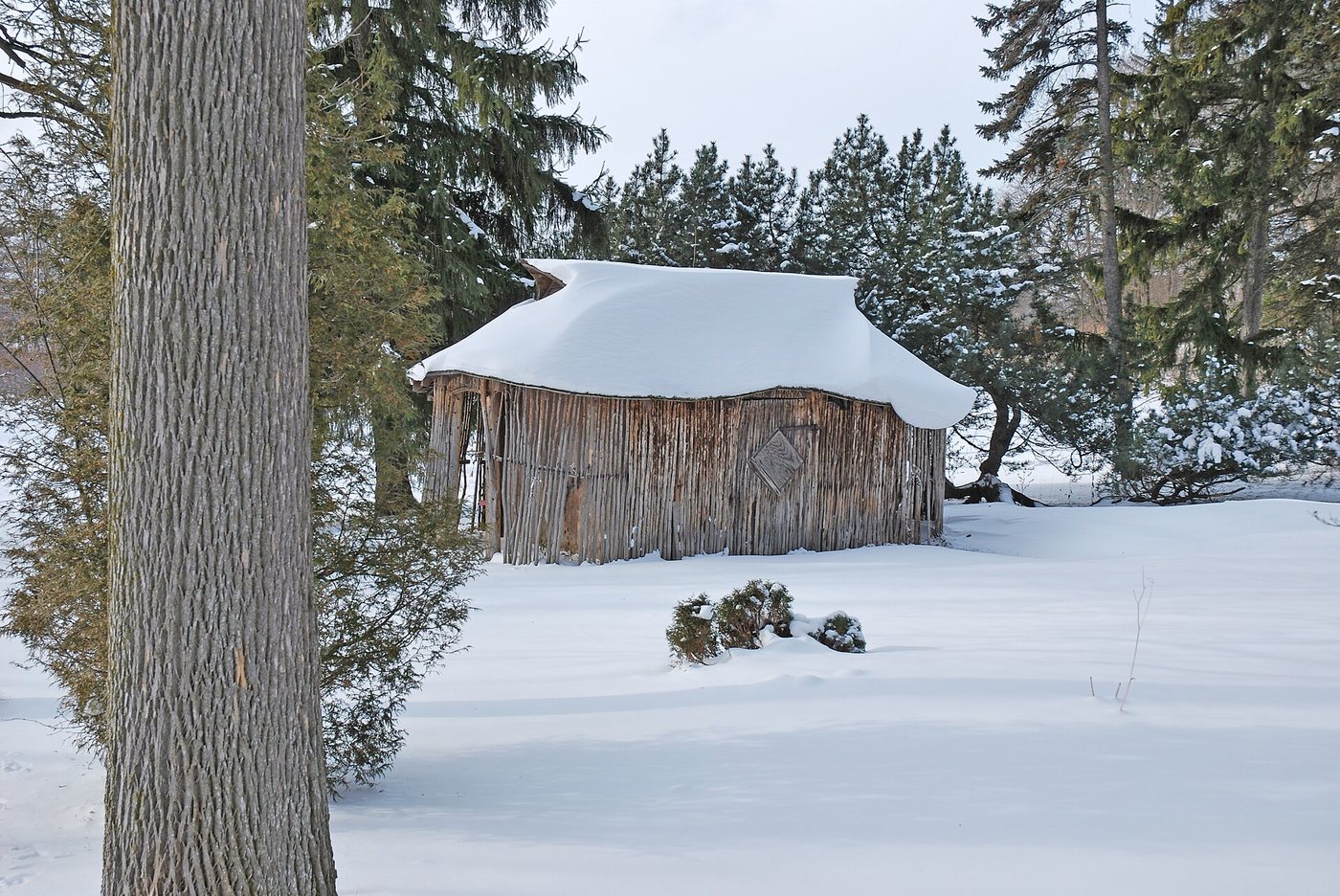
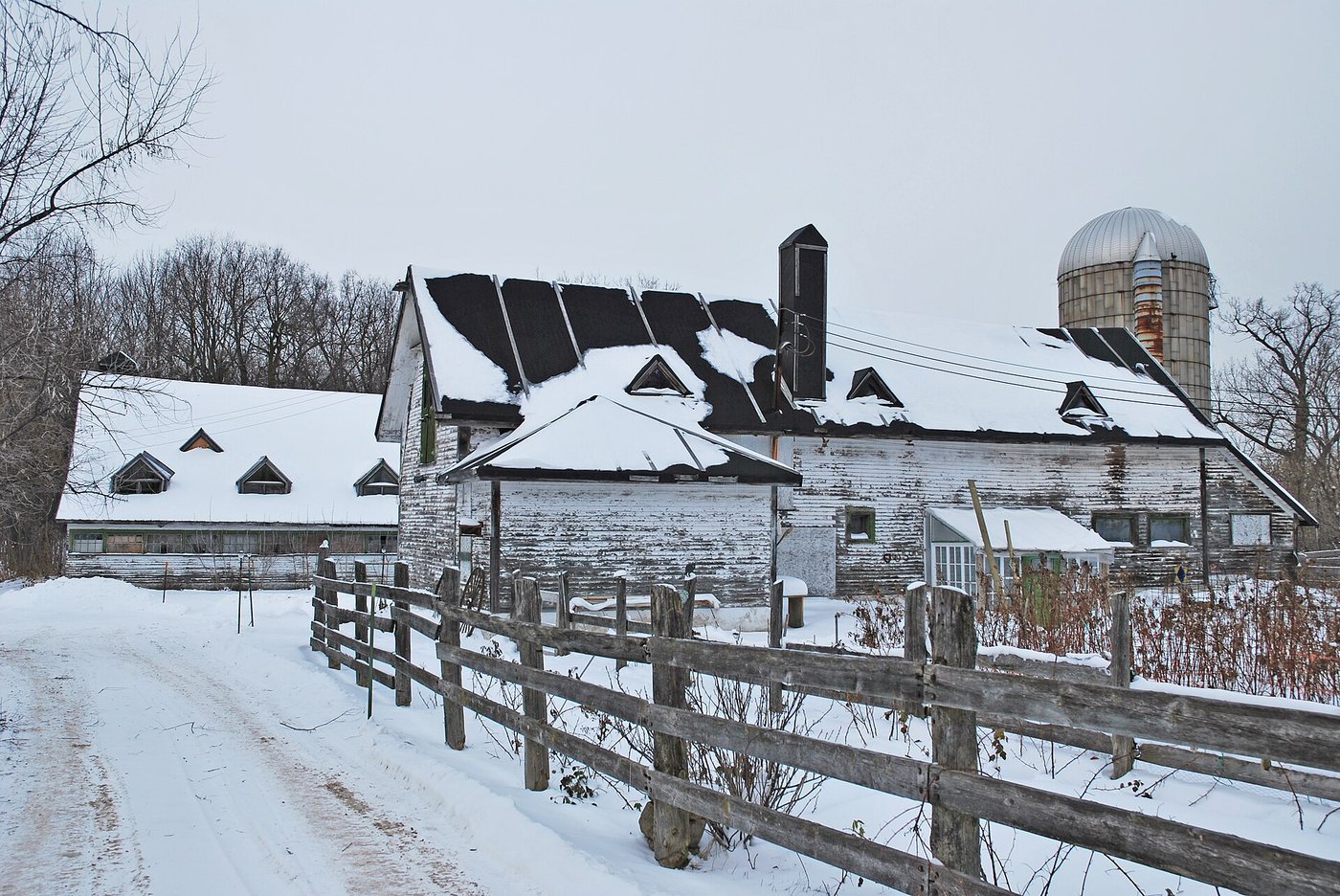
Bois-de-la-Roche. Further along chemin de Senneville, the Bois-de-la-Roche estate kept a working farm, with a barn-stable, workshop and even its own school building. The estate is usually associated with Senator Louis-Joseph Forget, the stockbroker who chaired the Montréal Stock Exchange and was the first French Canadian on the board of the Canadian Pacific Railway. Today the land is part of a Montréal agricultural park.

The architects. The Canadian Register of Historic Places notes that Senneville's estates show "the synergy created between the major Montreal financiers at the turn of the 20th century and some of the greatest Canadian architects of the period". Among them were Edward and William Maxwell, Shattuck, Percy Nobbs and David Shennan. Its landscapes show the influence of Frederick Law Olmsted's picturesque approach. Together they made Senneville an outstanding showcase of picturesque landscape design and of vernacular and Arts and Crafts architecture from 1865 to 1930.
A Village of Its Own (1895)
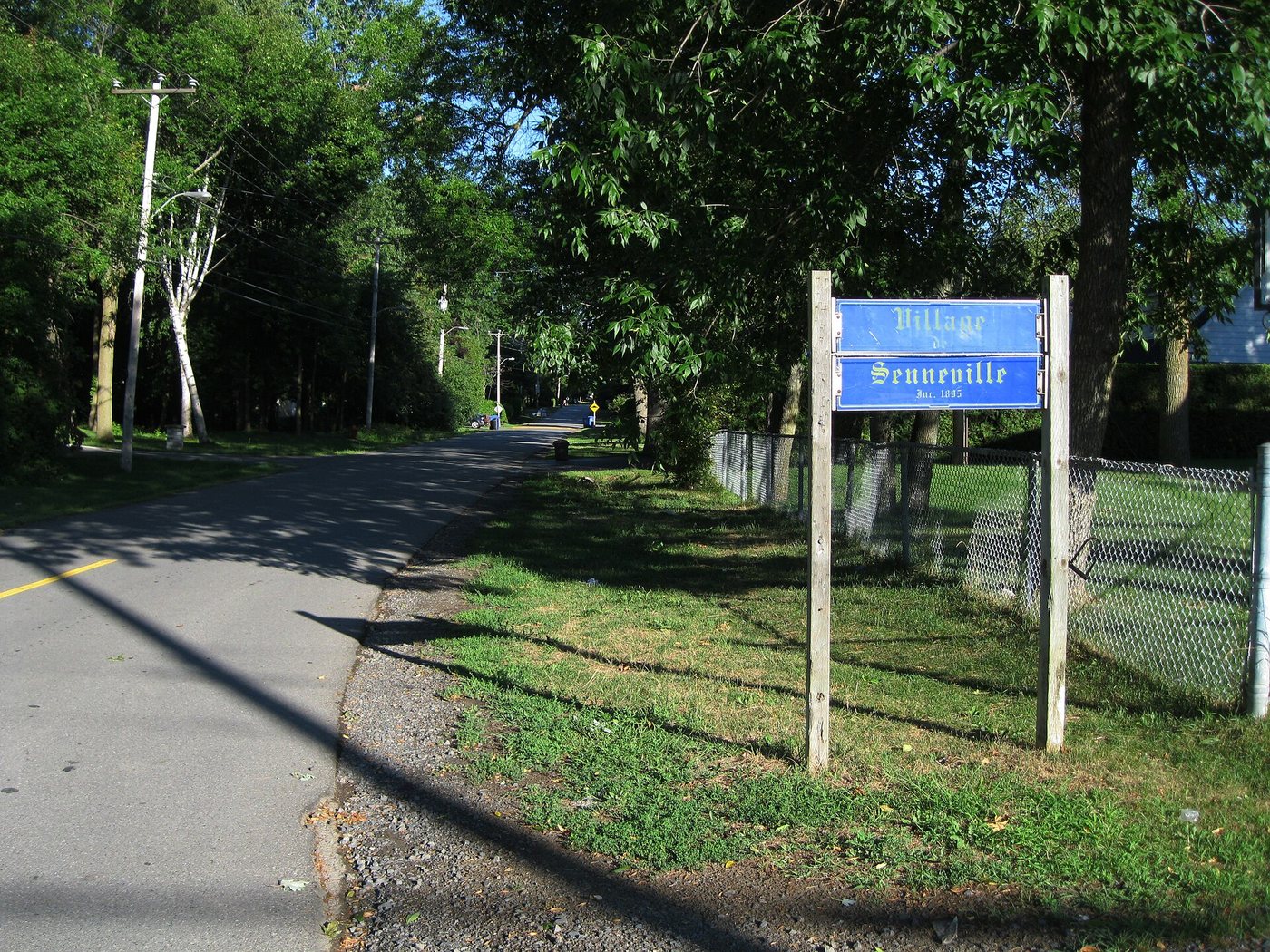
On January 12, 1895, the Village Municipality of Senneville was established, separating from the parish of Sainte-Anne-du-Bout-de-l'Île. It kept the boundaries it has today. A Senneville post office operated from 1911 to 1957.


The Second World War
During the Second World War, Senneville became the site of a rehabilitation centre for the armed forces. It was a quiet place for servicemen who did not need the continuous medical care offered at Sainte-Anne's Veterans' Hospital nearby.
Postwar Growth and the Arboretum
Senneville grew substantially in the 1950s and 1960s, as its quiet, tree-lined streets drew families from Montréal. In this period the Morgan family's woodland also became one of the West Island's best-loved natural places. McGill University acquired the property in 1945, and the Morgan Arboretum now covers about 245 hectares, with some 25 km of trails, 40 native tree species and more than 170 bird species.
In 1995 the village celebrated 100 years of incorporation with a year of centennial events, including a gala launch, a winter carnival, a festive Senneville Day and a closing recital in the fall.
Merger and Rebirth (2002–2006)
On January 1, 2002, in a sweeping reorganization of municipalities on the island, Senneville was merged into the City of Montréal as part of the borough of Pierrefonds-Senneville. Many residents opposed the merger. After a change of provincial government, a 2004 referendum allowed former municipalities to demerge, and on January 1, 2006, Senneville was reconstituted as an independent village. It is officially recognized as a bilingual municipality, a status confirmed on November 2, 2005.
Heritage Protected
Senneville's past is now protected at both levels of government:
- Federal: In 2002 the historic core of the village was designated the Senneville Historic District National Historic Site of Canada. The Battle of the Lake of Two Mountains is also commemorated nearby as a National Historic Site.
- Provincial: In November 2003 Québec classified the Fort Senneville ruins a historic site. The province has since funded archaeological research and work to stabilize the ruins. The site is on private land and is not open to the public.

Nature at the Tip of the Island
Senneville is one of the greenest corners of Montréal Island. The shoreline below the fort is still semi-natural and is part of the habitat of the rare map turtle. The fort site lies between the lake and the Senneville Forest ecoterritory, forming part of a wildlife corridor. The Bois-de-la-Roche agricultural lands, the Morgan Arboretum and the nearby Cap-Saint-Jacques nature park on the Rivière des Prairies together make up one of the largest blocks of protected green space on the island.
Senneville Today
Today Senneville is a quiet, affluent village of under a thousand people on 7.45 km² of land, with golf clubs, a yacht club, working farms and lakeshore estates. Its 17th-century ruins, Gilded Age country houses and protected woodlands sit side by side along chemin de Senneville. For a place so small, it has played a remarkable part in the history of Montréal and of Canada.
Images and Credits
| Image | Credit | License |
|---|---|---|
| lake-of-two-mountains.jpg | Jeangagnon, via Wikimedia Commons Source | CC BY-SA 3.0 |
| plaque-in-place.jpg | Photo: Anne-Marie Dufour / Parcours riverain – Ville de Montréal, via Wikimedia Commons Source | CC BY 2.0 |
| fort-ruins-historic.jpg | Philip John Bainbridge, 1839. Library and Archives Canada, via Wikimedia Commons Source | Public domain |
| boisbriant-landscape.jpg | Photo: Anne-Marie Dufour / Parcours riverain – Ville de Montréal, via Wikimedia Commons Source | CC BY 2.0 |
| bois-de-la-roche-barn.jpg | Photo: Anne-Marie Dufour / Parcours riverain – Ville de Montréal, via Wikimedia Commons Source | CC BY 2.0 |
| village-incorporation-1895.jpg | Jeangagnon, via Wikimedia Commons Source | CC BY-SA 3.0 |
| fort-senneville-1895.jpg | Wm. Notman & Son, c. 1895. McCord Stewart Museum, VIEW-3015 Source | Public domain |
| fort-ruins.jpg | A.J. Rice, Laprés & Lavergne, Le Monde illustré, 22 July 1899. BAnQ, via Wikimedia Commons Source | Public domain |
| red-ensign.png (logo) | Canadian Red Ensign, 1957–1965, via Wikimedia Commons Source | Public domain |
| senneville-timeline.png | Original graphic made for senneville.com | Own work |

Sources
- Centennial map "The Village of Senneville, Québec" (1995), produced by Judith Chinn, College of Geographic Sciences; history provided by the Centennial Celebrations Committee.
- Village de Senneville, History: https://www.senneville.ca/en/municipality/senneville-in-brief/history/
- Senneville (Wikipedia): https://en.wikipedia.org/wiki/Senneville,_Quebec
- Fort Senneville (Wikipedia; cites René Chartrand, French Fortresses in North America 1535–1763, Osprey 2005): https://en.wikipedia.org/wiki/Fort_Senneville
- Moulins du Québec, Senneville windmill fact sheet: https://www.mgvallieres.com/moulins/Senneville/Fiche.htm
- Chronologie de Montréal (UQAM), Fort de Senneville: https://chronomontreal.uqam.ca/chronologie/1405-fort-de-seneville
- Battle of the Cedars (Wikipedia): https://en.wikipedia.org/wiki/Battle_of_the_Cedars
- Report of the Committee on the Cedars Cartel, 17 June 1776 (Founders Online): https://founders.archives.gov/documents/Jefferson/01-01-02-0167
- OCPM brief on the Fort Senneville site: https://ocpm.qc.ca/sites/default/files/pdf/PD04/10f.pdf
- John Abbott (Wikipedia): https://en.wikipedia.org/wiki/John_Abbott
- Sir Edward Seaborne Clouston (Wikipedia; DCB entry by Carman Miller): https://en.wikipedia.org/wiki/Edward_Seaborne_Clouston and http://www.biographi.ca/en/bio/clouston_edward_seaborne_14E.html
- Frederick Cleveland Morgan (Wikipedia): https://en.wikipedia.org/wiki/Frederick_Cleveland_Morgan
- Le Sabot (Wikipedia; quotes the Canadian Register of Historic Places): https://en.wikipedia.org/wiki/Le_Sabot
- Louis-Joseph Forget (Wikipedia; DCB): https://en.wikipedia.org/wiki/Louis-Joseph_Forget
- Morgan Arboretum (Wikipedia): https://en.wikipedia.org/wiki/Morgan_Arboretum
- Wikimedia Commons, Category:Senneville, Quebec: https://commons.wikimedia.org/wiki/Category:Senneville,_Quebec